

What to do when your outside drain is blocked
Outside drains are incredibly important from dealing with everything from domestic waste leaving your property to draining away excess water from heavy rainfall. However, what do you do when your outside drain is blocked and how do you unblock an outside drain to get it back to working like normal?
As the leading drain unblocking company in the South West, here at Fastfix Drainage, we have repaired hundreds of different types of outside drain blockages over the years. This means that we have seen our fair share of different blocked drains and have seen which are the common recurring problems and know exactly how to unblock each of them.
We know how easily outside drains can become blocked and how frustrating it can be when your outside drain starts interfering with your daily lifestyle. You have most likely noticed a problem with your outside drainage system due to a bad stench radiating from the source, damage to electrical fittings or excess water sitting on the ground outside your home which is not getting drained away. These are common signs of a blocked drain outside.
Throughout this article, we will guide you through the four easiest ways to unclog your blocked outdoor drains and help get your drainage system working as it should as quickly as possible.
Please note that we strongly advise that if you do not have experience in drainage repair and unblocking you do not attempt to fix your blocked outside drains and instead leave it to a local drain unblocking company. Unblocking your drain can be dangerous and is best left to the professionals if you are unsure about anything.
If you are looking to get your outside drains unblocked for your domestic or commercial property in the South West by a trusted drainage company, speak with a member of the team on 0117 403 4536.
4 ways to unclog your blocked drain
If you have noticed that your outside drain has become blocked up and is causing you problems, depending on the issue, there are some simple ways to go about amending the issue at hand.
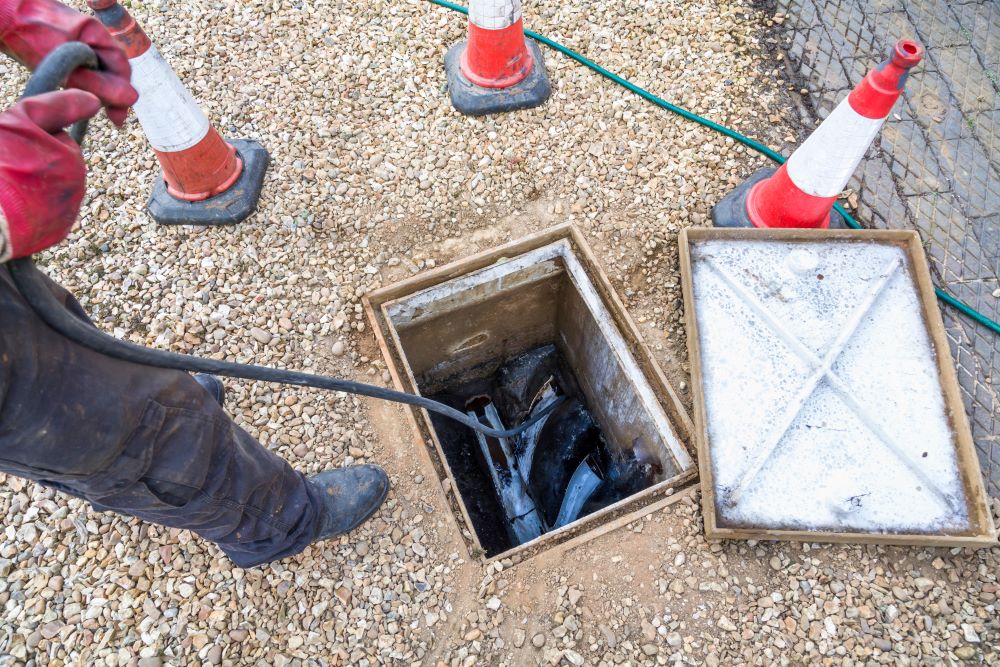
Firstly, identify where the issue is located by checking the water levels in the drain chamber. All you need to do is take off the drain covers and if it is full of water then there is a blockage in this drain chamber. If it is drained then the blockage is upstream and you can begin to narrow down the culprit using this technique. Once you have identified the blocked drain you can begin with finding a way to unclog it.
The four most common ways that you can attempt to clear your blocked outside drain is by:
- Unblocking your outside drain by hand
- Using a drain rod to unblock your blocked drains
- Unblock your drain with a hose
- Using a professional drain-unblocking company
1. Unblocking your outside drain by hand
Firstly, after you have identified where the blockage in the drain is you will first want to attempt a manual approach to clearing the blockage. This method of unblocking the drain by your hand is surprisingly very effective despite being slightly more intricate to master.
As always safety is the number one priority when attempting to unblock your outside drain and if you are not experienced in doing so we recommend contacting a qualified professional. Initially you want to get prepared by equipping yourself with specialised drain or pond gloves. If you don’t own either of these use heavy-duty bin bags to cover your arm up to the shoulder to stop the blocked waste touching your arm. We recommend using multiple bin bags due to their tendency to tear easily. Additionally, wear a snood, ski mask or tie a scarf around your mouth and nose to minimise exposure to the unpleasant odours emitted by blocked drains.
Once you are appropriately protected, reach into the open drain. Begin by slowly extracting any visible materials that might contribute to the blockage and clearing them away. We recommend starting upstream of the obstruction because it allows for easier removal.
2. Using a drain rod to unblock your blocked drains
If it isn’t possible to unblock your drain by hand, the next best step is to use a drain rod. Drain rods are an extremely effective tool that are able to help you clear blocked drains. Although they are simple to use, it is only worth using them if you know what you are doing. If you haven’t mastered the correct technique of using a drain rod, you can actually cause more damage to your blocked drain than it is worth. Therefore, if you are unsure it is worth getting in contact with a local professional to help.
On the other hand, if you do have previous experience in using a drain rod to unblock your drains, simply attach an appropriate-sized plunger to the end of your drain rod. Next, insert the rod into the drain and bend it so that it goes into the pipe. Next, push the rod in and turn it clockwise. From here add length to the rod when appropriate and continue this clockwise motion until you have extended your reach fully.
This motion will help you to clear the blockage without even having to get your hand wet. If this, method doesn’t work, you can replace the plunger attachment with a corkscrew attachment. This alternate attachment is designed to break up and firmly grip the blockage in your outside drain, clearing it.
3. Unblock your drain with a hose
If you don’t own a drain rod or this method isn’t working, we recommend trying to use a hose to unblock your drain. Using a hose or pressure jet to force the obstruction through the pipe is a great way to clear the blockage without using chemicals.
Initially, it’s crucial to clear the drain as much as possible by manually removing debris or using appropriate tools. Once the drain is partially cleared, you need to reduce the water level in the blocked drain to a manageable point. You can do this by scooping out the excess water with a bucket or tub.
Next, insert the hose or jet as far down the drain as feasible, ensuring it reaches the blockage. To prevent the pressure from causing an overflow, it’s important to seal the entrance of the drain cover tightly. You can do this by packing the entrance with old towels or bed sheets, creating a barrier to contain the pressure buildup.
Once the drain entrance is securely packed, turn on the hose at a high setting for approximately 10 seconds. This surge of pressure should effectively dislodge the blockage. If the blockage persists after this, it is unlikely that a hose will fix the issue and your best bet is to speak with a professional on how to clear the blockage.
4. Using a professional drain-unblocking company
If you still can’t unblock your outdoor drains or don’t know how to unblock them, we recommend getting in contact with a professional drain-unblocking company. When choosing a local company, we recommend looking online and reading reviews of each different company. This way you will get an understanding of the best and most reliable drain unblocking company so you can get the best deal alongside getting your outside drain unblocked quickly.
Here at Fastfix Drainage and Plumbing, we are proud to be known as the leading drain-unblocking company for domestic and commercial properties across Bristol and the South West of England. At Fastfix we have a team of industry-trained and experienced drainage engineers that have all the correct tools and know-how to remove the most stubborn of blockages. Our trained engineers will also always try and find the root cause of the problem so we can stop the unfortunate and repeat blockages from reoccurring.
Conclusion
In conclusion, there are several effective methods to tackle a blocked outside drain. From manual approaches like clearing blockages by hand or using drain rods to more accessible solutions such as using a hose or pressure jet.
However, for persistent or challenging blockages with your outdoor drain, seeking assistance from a professional drain-unblocking company is the best choice. Remember, timely action and preventive measures can significantly reduce the occurrence of blockages and maintain the proper functioning of your outside drains, preventing potential issues in the future.
If you do notice that your outdoor drain is blocked, it is worth getting in contact with a trusted, drain unblocking company as soon as possible because clogs seem to worsen over time. If you require support in unblocking your drains in the Bristol and South West area, look no further than Fastfix Drainage and Plumbing Limited. We offer high-quality and reputable local drainage repairs ranging from an array of commercial drainage and domestic drainage property projects.
Get in contact with a member of the team online or call us on 0117 403 4536.